
An Honest Review of Scrunch: Is It Worth Your Time?
Is Scrunch worth your time and AI visibility tracking journey? Let's find out!

Every AI optimization tool claims they’ll “10x your visibility” and “future-proof your content.”
Cool. But which one of these tools actually works? Or more importantly, how do these platforms work?
What insights do they even surface? Are these insights accurate or just an eyewash?
No idea? Yeaaah! Thought so!
That’s why we’re starting this series at GrowthPact—honest reviews of AI search tools from a content marketer’s perspective. It is our attempt to help content marketers, SEO professionals, founders, and anyone trying to navigate this mess.
Because let’s be real, there is a LOT of noise related to GEO out there, and you don’t want to spend your very valuable marketing budget on this.
We’re kicking off with Scrunch.
In this review, I’ll walk you through what it is, which features matter to content marketers, the honest pros and cons, when to opt for Scrunch, and my take on whether it’s worth your time and the HUGE investment!
Let’s go!
📌 TL;DR
Why this review exists: Every AI tool claims to “10x visibility.” We’re testing them ourselves to show what actually works—starting with Scrunch.
Prompt monitoring requires manual work: Auto-generated prompts are too branded. You’re adding valuable BOFU/MOFU prompts yourself—might as well track citations manually too.
GA4 AI traffic dashboard is the best feature: Clean, presentation-ready visualizations of bot crawl activity. Saves time for client reporting.
Most insights you can get for free: Run prompts yourself, note citations and competitor mentions. Scrunch consolidates this, but doesn’t discover anything new.
Only worth it at agency/enterprise scale: Makes sense if you’re managing 5+ clients with $500+/month budgets and dev support. Solo marketers can skip it.
What is Scrunch?
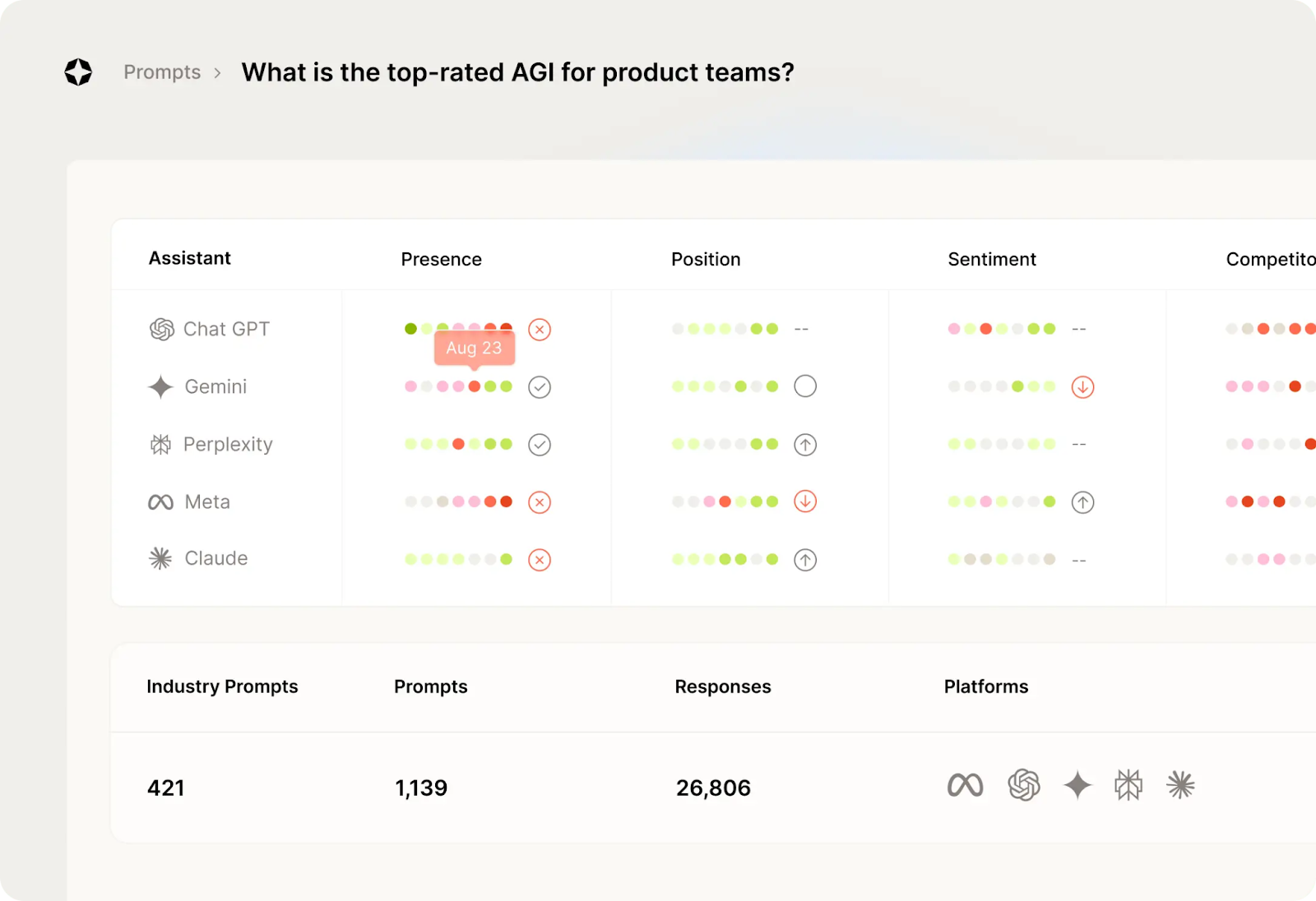
Scrunch is an AI visibility-tracking tool that shows you how your brand appears across LLMs like ChatGPT, Perplexity, and AI Overviews.
Scrunch monitors where you’re getting cited, tracks your performance against competitors, and gives you insights on why AI engines are (or aren’t) recommending your content.
But that’s just surface-level information that you’ll find on Scrunch’s website.
I did my research, tried this tool end-to-end, and here are my honest thoughts on Scrunch.
Top Scrunch Features - My Honest Evaluation and Thoughts
#1: Prompt Monitoring – A lot of manual work is involved!
Scrunch’s core feature is prompt tracking. You add prompts, it searches them across AI engines (ChatGPT, Perplexity, Gemini, Claude), and creates a dashboard showing mentions, citations, and competitor performance.
📌 Does it work?
Sort of. The problem is that you have to add prompts manually. If you let Scrunch auto-generate them, it creates very specific, branded prompts like “best [your product category] like [your brand]”—where obviously your brand will show up.
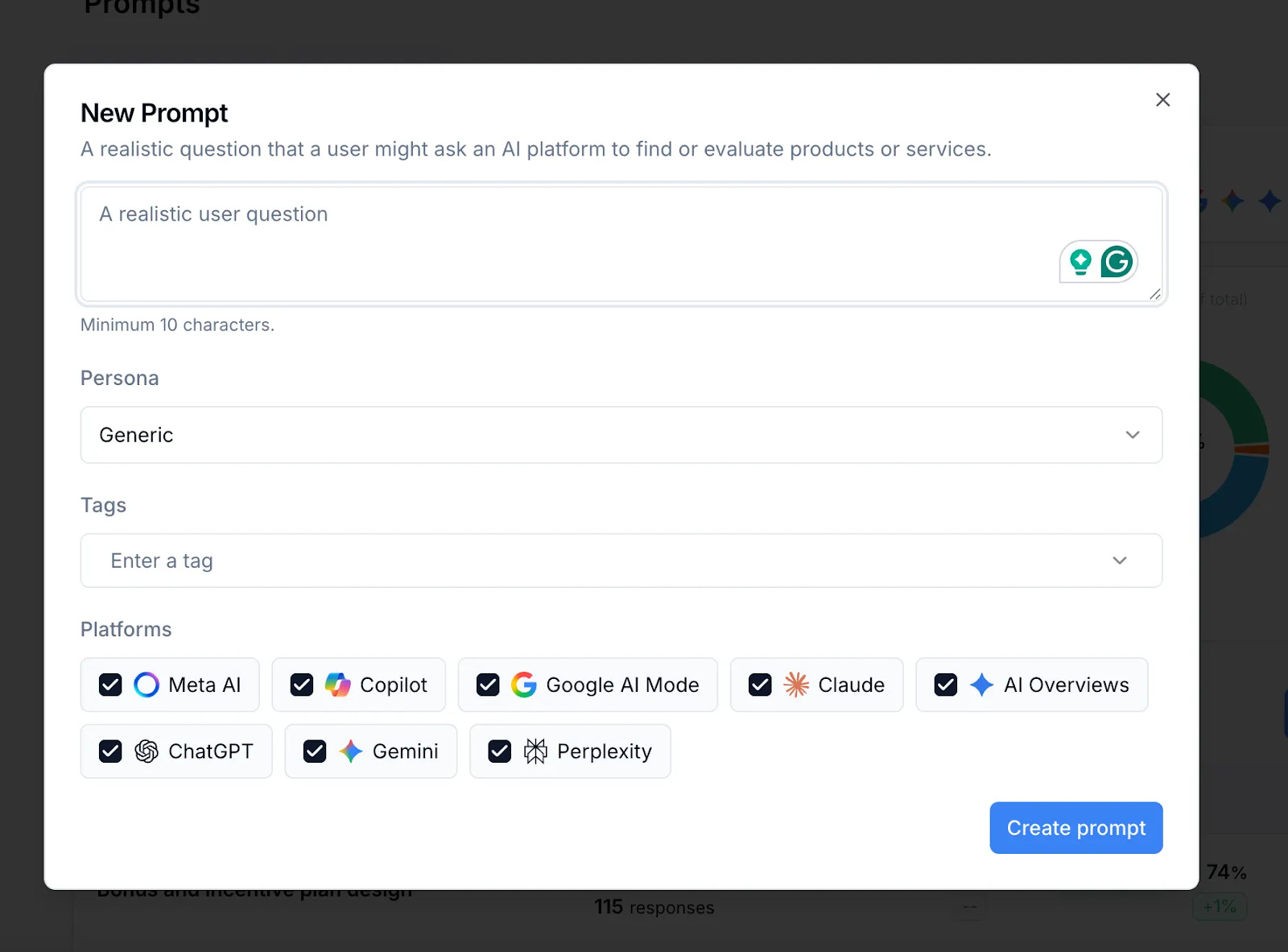
For actual valuable BOFU/MOFU prompts like “best [category] software” or “[category] tools for [use case],” you have to add them by yourself and keep tracking/adding/removing regularly.
The bigger question: what’s stopping you from tracking this manually?
Unless location-based AI results vary significantly (which Scrunch doesn’t guarantee it accounts for accurately), I don’t really see the value here. The $100/month plan only gives you 100 prompts for one user—not nearly enough for serious tracking.
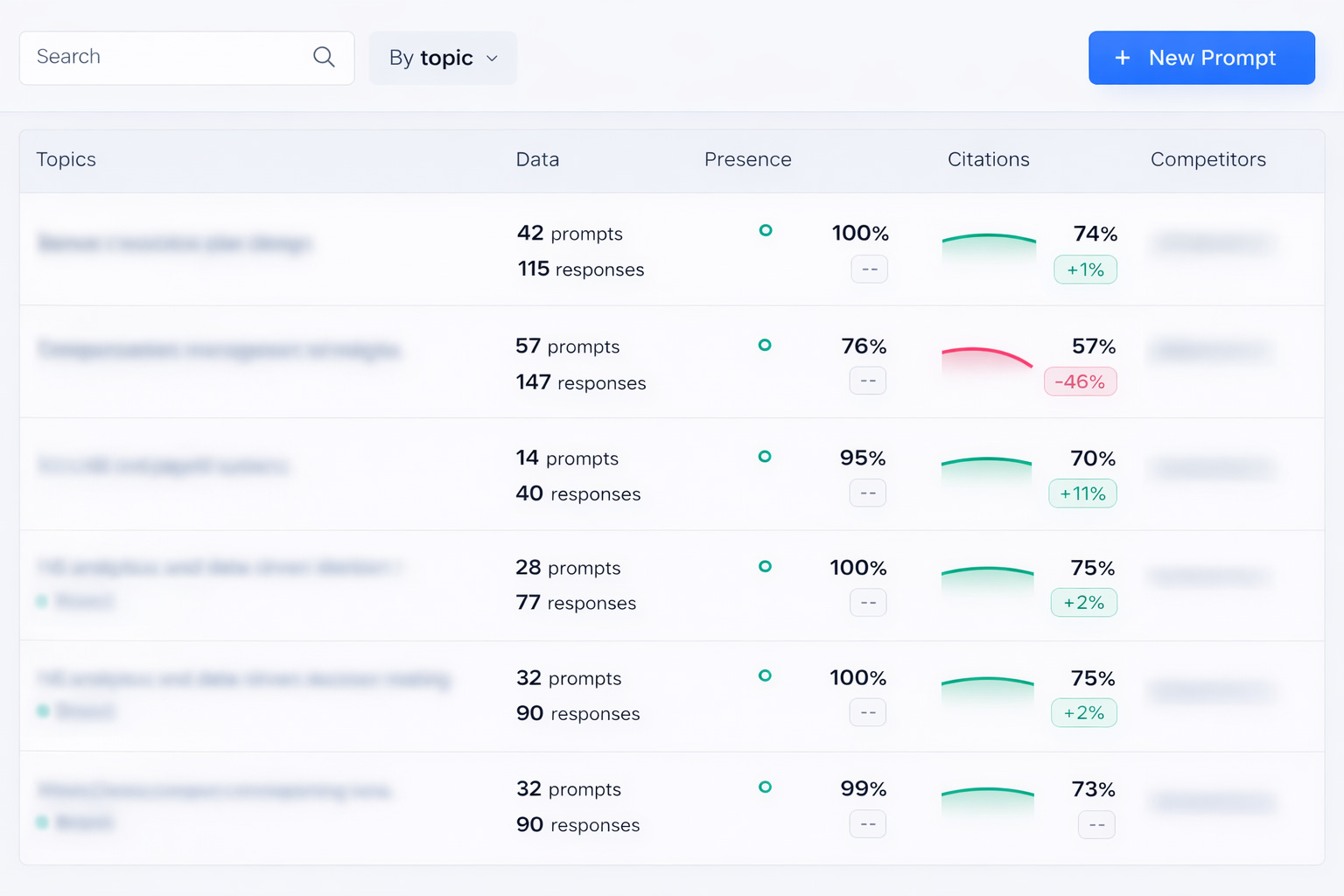
⚖️ Verdict: Not worth it unless you’re tracking hundreds of prompts.
#2: Insights Feature – Somewhat useful
This is where Scrunch analyzes why AI engines are citing (or not citing) your content. It offers optimization suggestions based on what it finds.
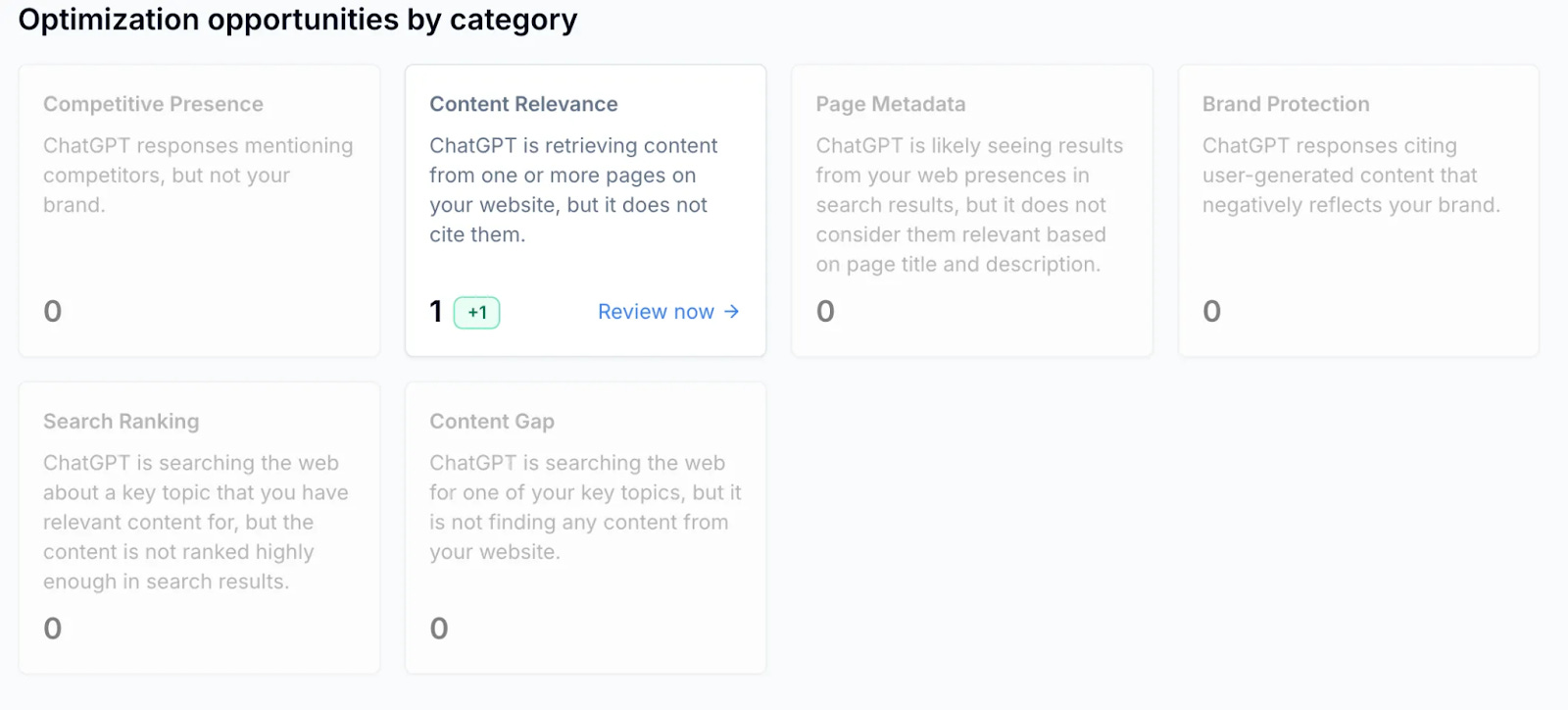
In my testing, it surfaced something interesting: ChatGPT was pulling content from our site as a source, but not explicitly mentioning us. Scrunch offered optimization suggestions and showed which tools were being cited instead.
📌 Does it work?
Yes, but with a caveat. Since you’re providing the prompt anyway, you could manually analyze the AI response and figure out the same insights. The value here is that Scrunch packages the “why” for you—saving time if you’re tracking many prompts.
⚖️ Verdict: Useful if you’re analyzing dozens of prompts and want insights aggregated. Not essential if you’re only tracking a handful of queries.
#3 Citations Feature – Also doable manually
For each prompt you track, Scrunch shows you which other domains get cited, your citation share percentage, competitors’ shares, and third-party platform mentions (G2, Capterra, Gartner).
📌 Does it work?
Yes, it surfaces the data. But again, you can track this manually. Run the same prompt yourself, note which brands get mentioned, and you have the same information. The only advantage is that Scrunch aggregates this across multiple prompts in one dashboard.
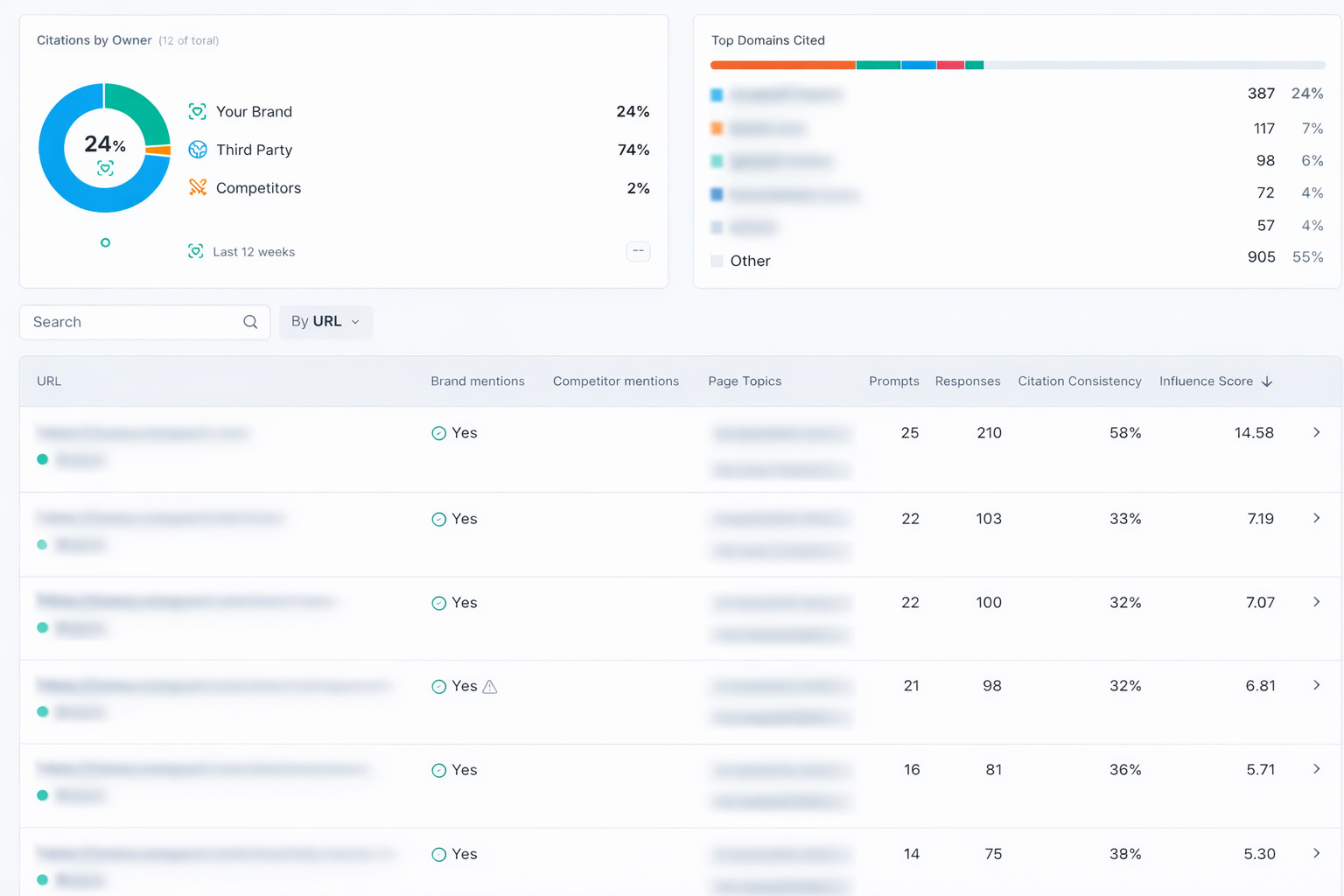
⚖️ Verdict: Convenient for bulk tracking, but not a groundbreaking feature. You’re essentially paying for consolidated reporting of data you could gather yourself.
#4: GA4 Analytics Dashboard for AI Traffic – Actually useful
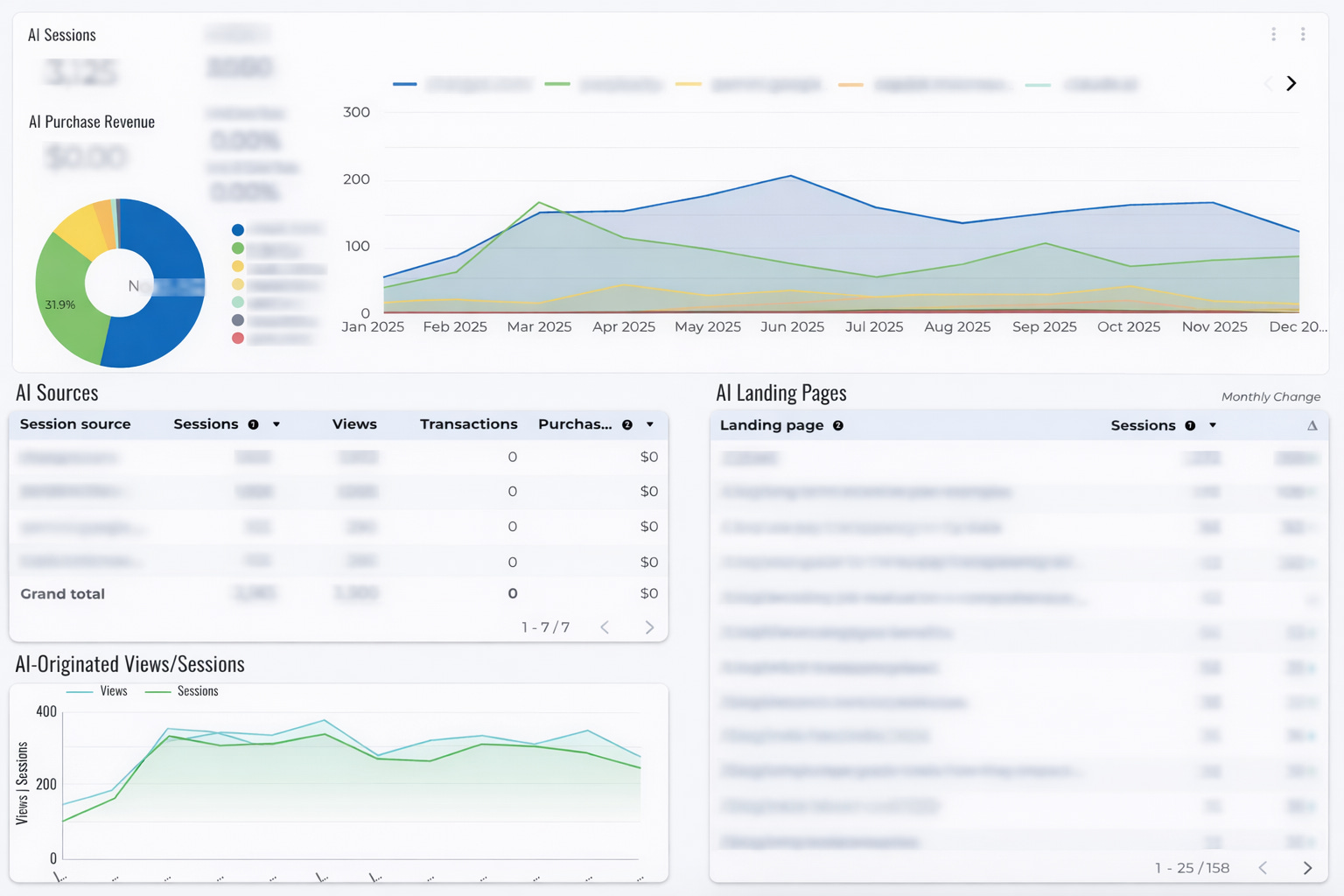
This was the standout for me. Scrunch tracks AI bot traffic across engines—ChatGPT, Perplexity, Gemini, Claude—and visualizes crawl activity over time in a clean, presentation-ready dashboard.
I could see a year’s worth of AI referral data formatted for client reports, LinkedIn posts, or case studies. GA4 and customer journey tracking tools have this data, but not in this format. And it really saves your time when a tool centralizes it all in one dashboard.
📌 Does it work?
Yes. If you’re running AI optimization experiments and need something presentable fast, this actually saves time.
❌ What’s missing: It doesn’t show which specific blog/landing page got traffic from which engine, or which prompts drove visits.
⚖️ Verdict: Worth it if you’re doing regular reporting on AI traffic. Not essential if you’re just tracking internally.
#5: Page Audit Report – Semi-useful
Scrunch audits your pages for AI-friendliness and flags technical issues that might prevent LLM crawlers from reading your content properly.
In my testing, it flagged one issue: “Is the non-JavaScript version of the page substantially the same as the JavaScript version?” This is a real technical problem, but not something most content marketers can fix without developer involvement.
📌 Does it work?
Technically, yes—it spots crawlability issues. But these are developer-level fixes, not content marketer fixes. You must have dev resources to act on these.
⚖️ Verdict: Helpful for technical SEO teams with dev support. Less useful for content marketers working solo.
Pros and Cons of Scrunch from the POV of a Content Marketer
What works:
Presentation-ready AI traffic reporting – The GA4 analytics dashboard is genuinely useful if you’re doing client reporting or sharing AI optimization results. The visualizations are polished enough to use as-is in decks, LinkedIn posts, or case studies without additional creative work.
Consolidated tracking in one place – If you’re tracking AI visibility across multiple prompts, competitors, and engines, having everything in one dashboard saves time over manual tracking. You’re not jumping between ChatGPT, Perplexity, and Gemini to check citations.
Insights into why you’re not getting cited – Scrunch surfaces optimization suggestions based on why AI engines are skipping your content or citing competitors instead. It’s not an exceptional analysis, but it packages the “why” for you, which helps if you’re managing multiple clients or brands.
What doesn’t work:
You’re still doing manual work – The $100/month plan gives you only 100 prompts for one user. If you want serious tracking, you need the $500/month plan. And either way, you’re manually adding non-branded prompts because Scrunch’s auto-generated ones are too specific to be useful.
Most insights are replicable manually – Citations, competitor mentions, share percentages—you can track all of this yourself by running prompts and analyzing responses. Scrunch’s value is consolidation, not discovery. If you’re only tracking a handful of prompts, paying for this feels unnecessary.
Generic trend data – The AI Search Trends feature sounds useful, but the categories are too broad to matter for niche B2B industries. You can request custom categories, but that defeats the point of having ready-to-use trend insights.
When should you opt for Scrunch?
Scrunch makes sense if you’re managing AI visibility at scale. Here’s when it’s worth considering:
You’re an agency managing multiple clients – If you’re tracking AI visibility for 5+ brands and need presentation-ready reports, Scrunch’s dashboard saves manual compilation time.
You can afford the $500/month plan – The $100/month tier is too restrictive (100 prompts, one user). If you can’t commit to $500+, manual tracking works better.
You’re running ongoing optimization experiments – If you’re actively testing what gets cited and tracking performance over months, centralized reporting helps. For occasional checks, manual tracking is fine.
You need competitor benchmarking at scale – Tracking citation share vs. 10+ competitors across dozens of prompts justifies the cost. For casual competitive analysis, it’s overkill.
My Final Honest Take on Scrunch - Is It Worth Your Time?
Scrunch is a good tool, but whether it’s worth it depends entirely on your organization’s size, budget, and use cases.
If you’re a one or two-person marketing team at an early-stage startup, you don’t need Scrunch. You can do this manually. A ChatGPT Plus subscription is all you need. Run your prompts, track citations yourself, and analyze competitor mentions. It takes more time, but it’s free.
But if you have the resources—money, time, and developer support—Scrunch starts making sense. Specifically:
If you’re an agency managing multiple client projects and need consolidated dashboards, the time savings justify the cost
If you work at an enterprise or larger company with a budget allocated for AI optimization and dev resources to implement the fixes, Scrunch becomes a productivity tool rather than an expense.
The key is actionability. If you can’t implement the strategies Scrunch recommends, or if you’re only tracking a handful of prompts (because you’re working on one brand), paying for Scrunch doesn’t make sense.
But then again, it’s our opinion.
I hope this was helpful.
Stay tuned for our next review—we’ll be testing Profound next.