
An Unbiased Review of Profound: Is It Worth Your Time and Money?

Almost all AI visibility tools launching right now promise to show you “exactly how AI sees your brand.” Some of them deliver. Some of them are still not there yet. And there are some which are way too expensive, especially for small marketing teams.
In this series, we at GrowthPact try our best to break down how these tools work and present you with all the details you need to make an informed decision.
Last month, we reviewed Scrunch — and the verdict was mixed.
📚Read our honest Scrunch Review!
Profound was next on the list. Same category, different positioning, significantly higher ambitions.
So I did what I did with Scrunch — tested it end-to-end, tracked real prompts for a real brand, and asked the same uncomfortable question throughout: what’s this actually telling me that I couldn’t figure out myself?
Here’s what I found.
📌 TL;DR
Why this review exists: Last month we tested Scrunch and found it useful at scale, unnecessary for most. Profound is next—same category, different execution.
Topic-level visibility is the real differentiator: Most tools give you one visibility score. Profound breaks it down by theme, so you actually know where AI engines cite you vs. ignore you.
Answer Engine Insights is the standout feature: Competitor benchmarking, sentiment mapping, citation sources, and platform-specific performance in one dashboard. This is where strategic decisions get made.
Prompt quality is still your job: Auto-generated prompts are better than Scrunch’s, but not good enough to rely on. You’ll refine and add prompts yourself—this is a framework, not autopilot.
Agent Analytics is weaker than competitors: Shows page categories, not exact URLs. Scrunch does this better. Knowing AI traffic hit “blog pages” isn’t actionable.
Only worth it if you’re serious about AEO: The $99 Starter plan is too limited. Growth at $399/month makes sense if you’re tracking multiple topics, benchmarking competitors, and building content strategy around this. Solo marketers testing the waters should start manual.
What is Profound?
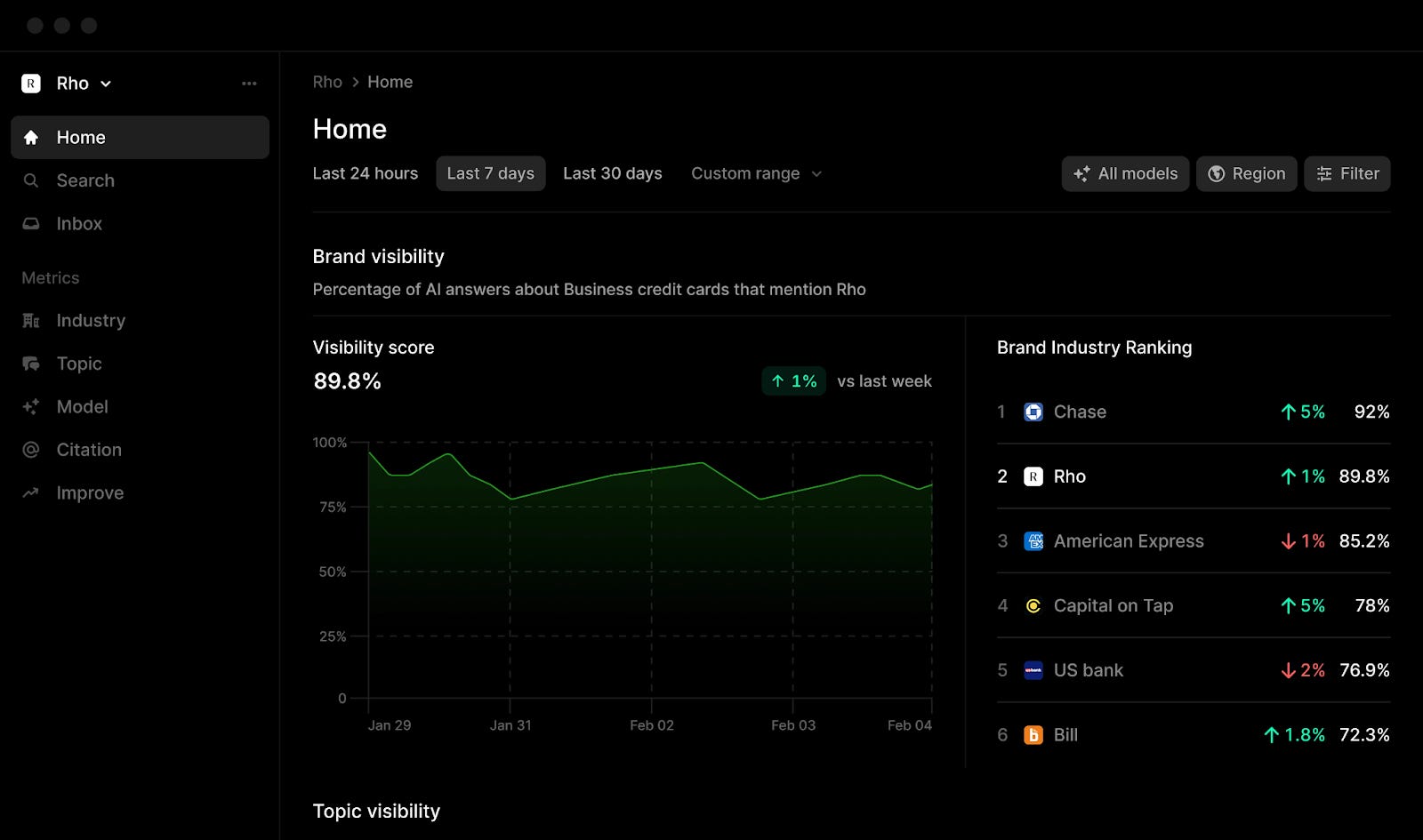
Profound is an Answer Engine Optimization (AEO) platform that tracks how your brand appears across AI engines — ChatGPT, Perplexity, Google AI Overviews, and more.
At its core, it monitors:
Where you’re being cited
How visible you are relative to competitors
What’s driving or hurting that visibility
But unlike traditional SEO tools that obsess over rankings, Profound is built around a different question: when someone asks an AI a question your brand should answer, does your brand show up?
The Starter plan runs $99/month and covers ChatGPT tracking with 50 prompts.
The Growth plan is $399/month and opens up three answer engines, 100 prompts, and content optimization features.
Enterprise plan is custom-priced for larger teams and agencies.
I tested Profound on a real B2B brand, across its core features. Here’s an honest breakdown of what works, what doesn’t, and who this is actually built for.
Top Profound Features — My Honest Evaluation and Thoughts
#1: Dashboard and Visibility Score — More useful than it looks at first glance
The first thing you see when you log into Profound is the Visibility Score — a percentage trend chart showing how visible your brand is across AI and search engines over time. Below that, there’s a topic-level breakdown that splits visibility by theme or module.
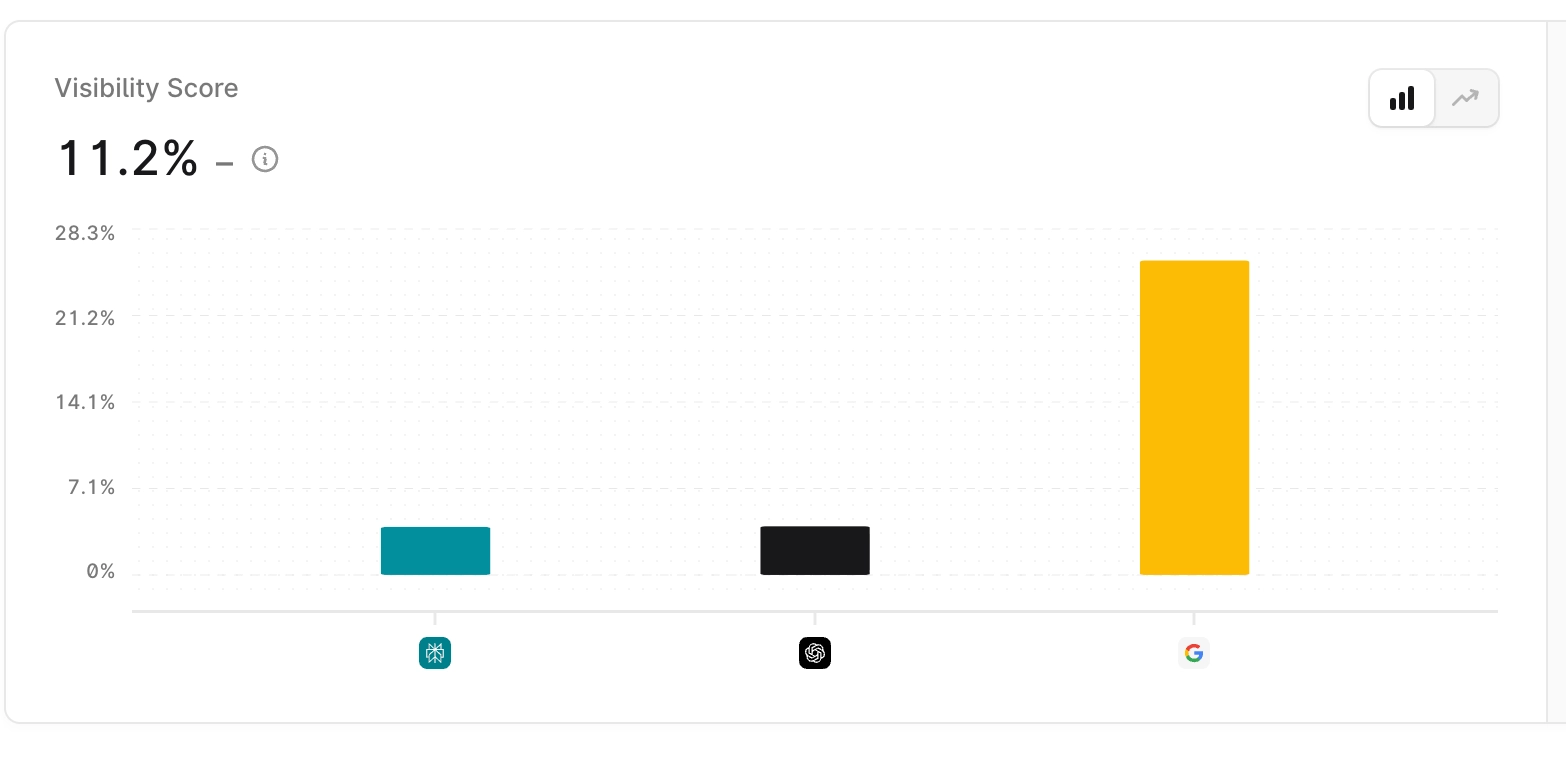
For each topic, you get the current visibility percentage, your relative position, citation or share of voice, and the top pages being cited for that theme.
Say your product covers five different use cases, but you’re known for two. For a topic you’re not primarily associated with, your visibility might sit low — around position 25 or below.
But for a topic where you’ve built credibility, you could be in the top 10 with a solid share of voice. No individual article ranking. No traditional SEO signal. Just AI engines referencing your product because it’s relevant. Visibility without classic rankings.
That distinction matters. Most SEO tools conflate the two. Profound separates them, which gives you a more honest picture of where you actually stand.
Each topic also surfaces optimization suggestions, competitor comparisons, and content opportunities — which I’ll get into shortly.
📌 Does it work?
Yes. The topic-level visibility breakdown is genuinely useful, especially for B2B brands covering multiple product areas. It tells you which themes are working and which ones AI engines are largely ignoring you on.
⚖️ Verdict: One of the stronger parts of the platform. Worth paying attention to.
#2: Answer Engine Insights — The standout feature
This is where Profound pulls ahead of other tools I’ve tested.
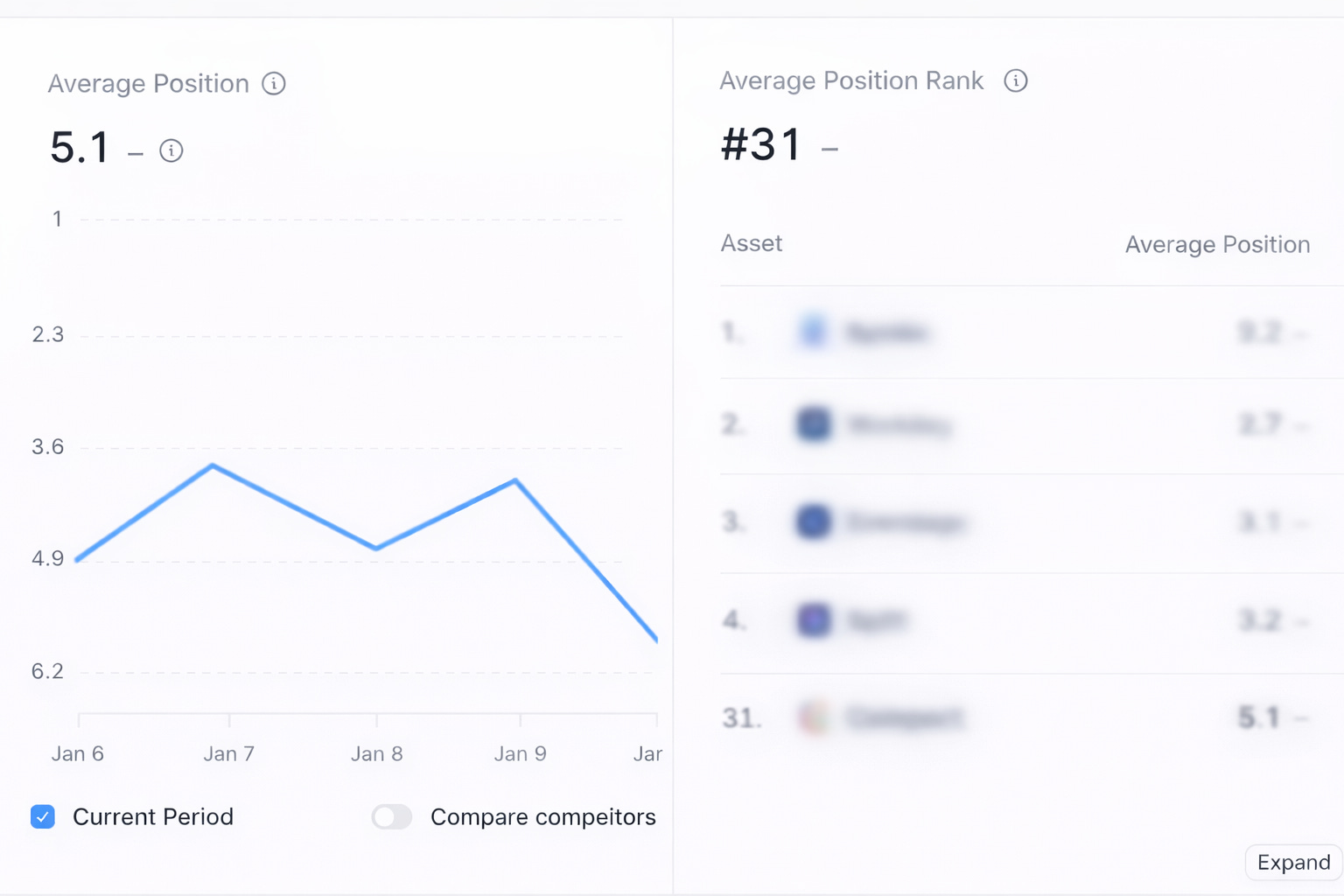
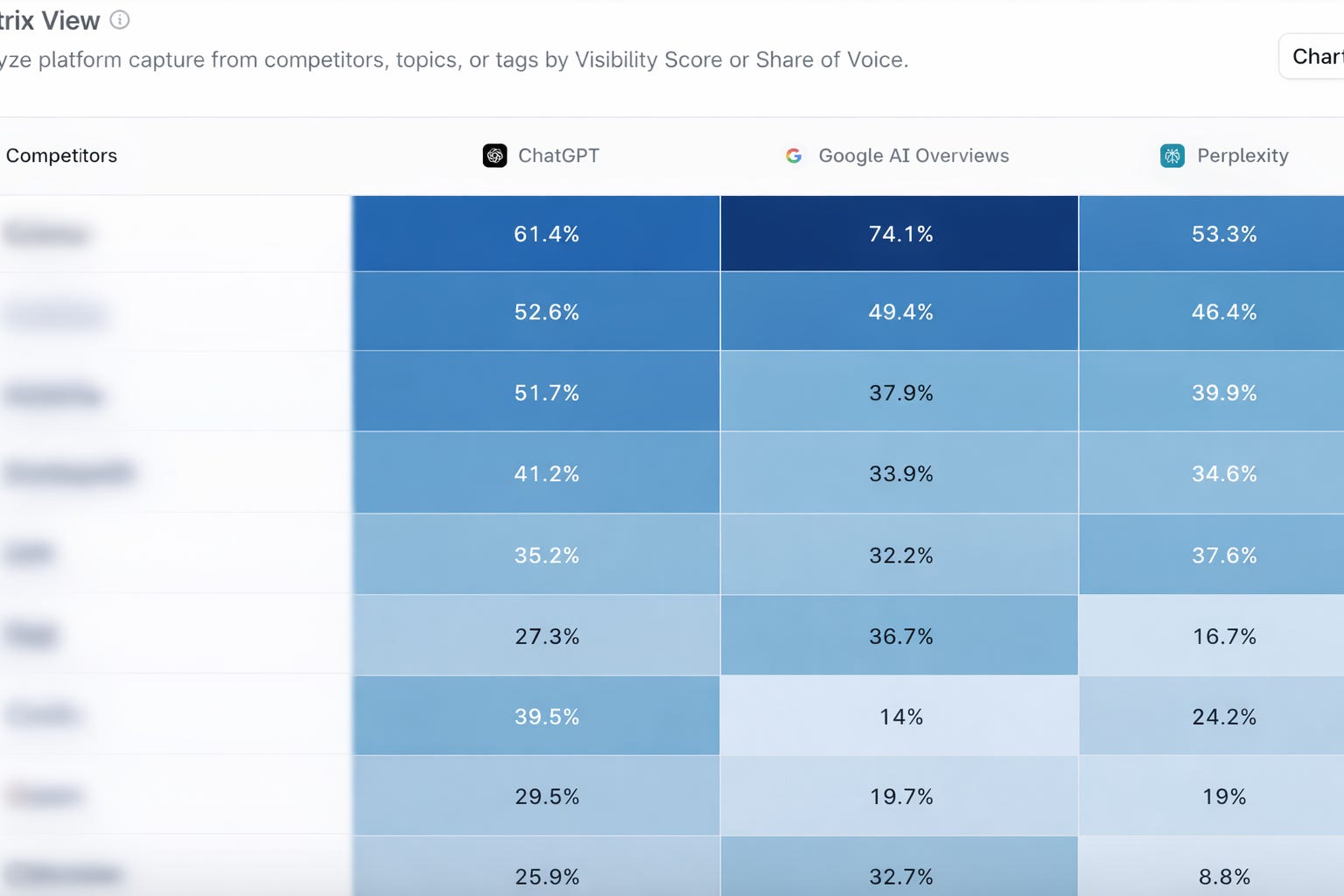
The dashboard shows overall visibility, competitor visibility scores, share of voice, and average position — all in one view. You can also drill down by topic, which means you’re not just seeing how you compare to competitors broadly. You’re seeing where specifically you’re winning or losing.
Platform-level breakdowns add another layer. Depending on your brand, one engine might drive the highest visibility, while another might show better average position. For citations and sentiment, the split can look completely different again. That kind of granularity helps you prioritize — if AI Overviews are working, you double down there. If Perplexity is underperforming, you know where to focus next.
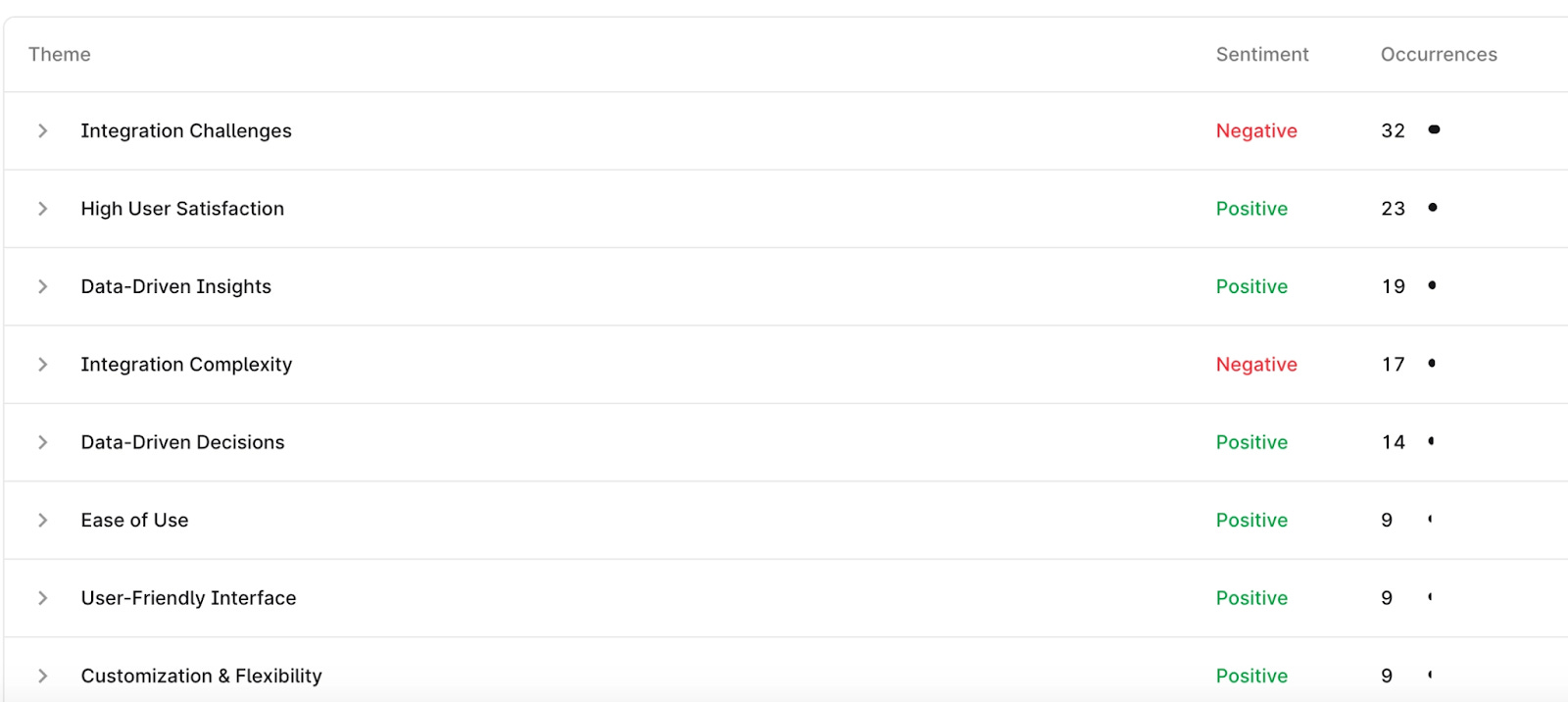
Sentiment analysis runs at the theme level, based on prompt frequency and mentions. A theme closely tied to your core product might show up as trending with positive sentiment. A peripheral topic — or one where there’s market confusion about what you do — could flag as negative. That’s a perception issue worth addressing through content. This kind of theme-level sentiment mapping is something most visibility tools skip entirely.
Citation source breakdown is the third piece. Profound shows where citations are actually coming from — earned media, your own site, social platforms, competitor blogs, third-party domains. You might find that an industry publication is your biggest citation source, or that Reddit threads are driving more references than your own blog. You can even see which competitor pages are getting cited for prompts where your brand doesn’t appear at all.
Review sites are one of those third-party surfaces worth watching: a Blastra directory audit of answer-engine tools treats review sites and software directories like G2, TrustRadius, Capterra, and Gartner Peer Insights as a layer that shapes what AI assistants tell buyers about software, making a brand's presence across them part of its AI-visibility footprint.
One recurring limitation worth flagging: prompt quality is still the biggest dependency. Profound’s auto-generated prompts are better than what I saw in Scrunch — broader, more realistic, closer to how users actually ask questions. But they’re still not precise. In several cases, the tool treated a specialized platform as a generic product category, skewing results.
📌 Does it work?
Yes — and this is the feature that justifies taking Profound seriously. Competitor benchmarking, sentiment mapping, and citation source breakdowns are genuinely useful for a B2B content strategy.
⚖️ Verdict: The strongest feature on the platform. If this is the only thing you use Profound for, it’s still worth evaluating.
#3: Agent Analytics — Useful, but Scrunch does one thing better
To use this feature, you connect Profound to Google Analytics. Once set up, it shows AI-driven traffic over time — which engines sent users, how many sessions there were, and which page categories they landed on.
It’s a solid baseline view of how AI traffic behaves across your site. The problem is the word “categories.” Profound shows you that users landed on blog pages or solution pages. Scrunch showed exact URLs.
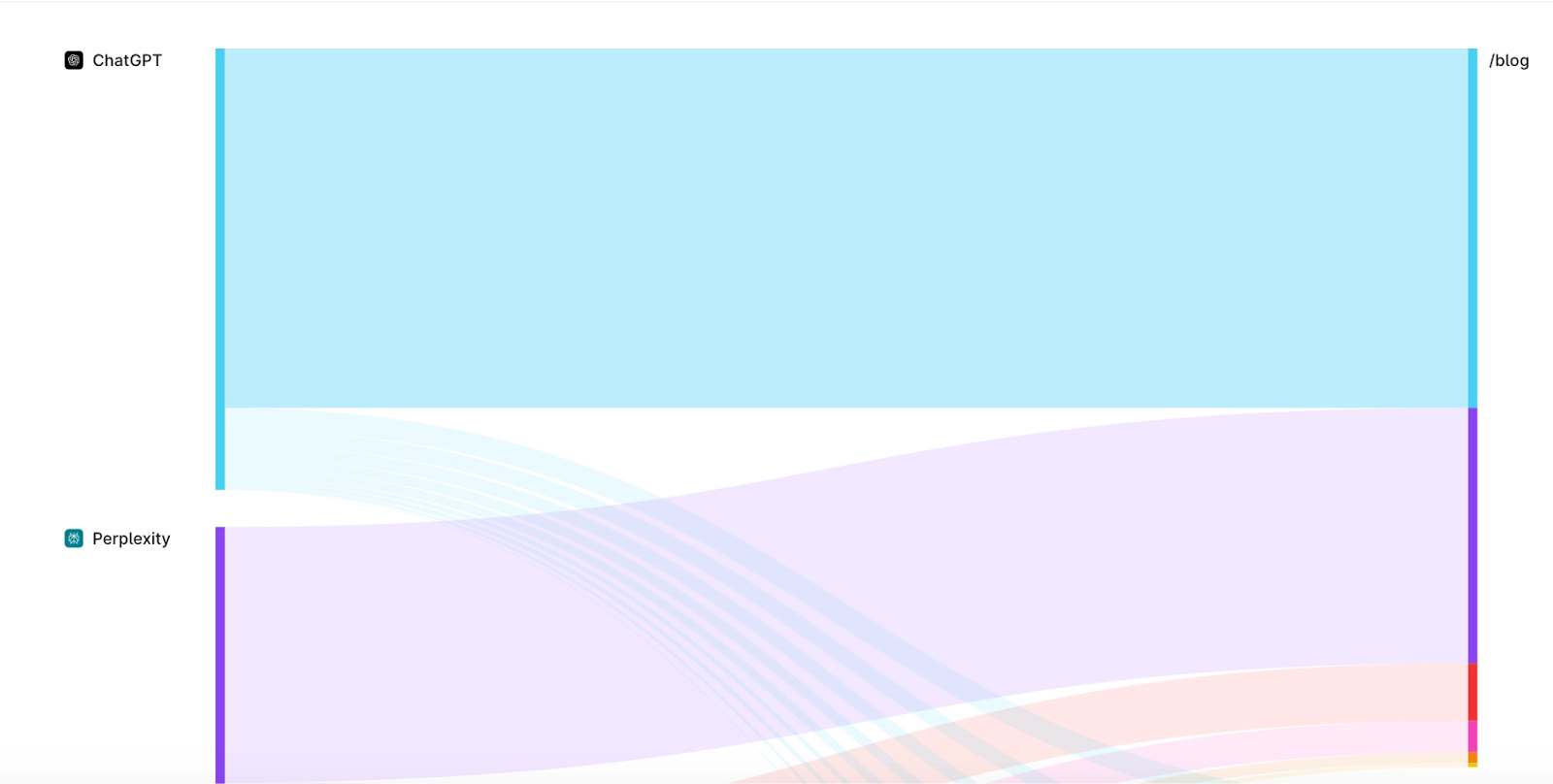
That’s not a small gap. Knowing AI traffic hit “blog pages” tells you very little.
📌 Does it work?
As a general overview, yes. As an actionable insight tool, it falls short of what Scrunch offers here.
⚖️ Verdict: Useful for tracking AI traffic trends. Less useful for understanding which specific content is driving it.
#4: Additional Features — Early, but worth watching
A few other features round out the platform, though most are either in beta or depend heavily on the quality of the setup.
The Opportunities feature identifies articles where AI engines are pulling ideas or content from without explicitly citing your brand. It then suggests outreach targets. In testing, it flagged a Reddit thread around tool integrations as a participation opportunity — partially relevant, not strongly aligned. The concept is solid, the execution feels early.
Content Creation and Optimization tools generate ideas and improvement suggestions based on your tracked prompts. The quality here scales directly with how well your prompts are defined — generic prompts produce generic suggestions.
Brand Hub is where you build a brand kit: ICP, competitors, point of view, writing style. The idea is that feeding Profound this context improves output quality across the platform. Worth setting up properly if you’re committing to the tool.
The Workflow feature exists but wasn’t accessible during my trial.
⚖️ Verdict: Treat these as supporting features for now, not reasons to buy.
Pros and Cons of Profound from the POV of a Content Marketer
What works:
Topic-level visibility breakdown — Profound doesn’t just tell you how visible you are overall. It breaks visibility down by theme, which means you can see exactly where AI engines are referencing you and where they’re ignoring you. For brands with multiple product areas or use cases, this is genuinely useful.
Answer Engine Insights are the real differentiator — Competitor benchmarking, sentiment mapping, citation source breakdown, and platform-specific performance in one dashboard. This is the feature that separates Profound from most tools in this category. If you’re building a content strategy around AEO, this is where the useful decisions get made.
Prompts are more realistic than competitors — Profound’s auto-generated prompts are broader and closer to how users actually search. That means the visibility data you’re looking at reflects reality more closely, not a best-case scenario engineered around your brand name.
Sentiment and theme mapping helps with prioritization — Knowing which themes are trending positively and which are flagging negatively gives you a content roadmap. Double down on what’s working, address what isn’t. Most visibility tools don’t give you this.
What doesn’t work:
Prompt quality is still your responsibility — The auto-generated prompts are better than Scrunch’s, but they’re not good enough to rely on entirely. You’ll still need to manually refine and add prompts to get accurate, meaningful insights. The tool is only as good as the prompts you feed it.
Agent Analytics lacks specificity — Scrunch shows exact URLs being visited by AI-driven traffic. Profound shows page categories. That’s a meaningful gap. Knowing AI traffic landed on “blog pages” is interesting. Knowing it landed on a specific article is actionable.
Several features are still early — Opportunities is in beta and not yet reliable enough to act on consistently. Content generation quality depends heavily on prompt setup. The Workflow feature wasn’t even accessible during testing. These feel like features to watch, not features to buy for.
The Growth plan is a significant jump — Going from $99/month to $399/month for three answer engines and content features is a steep step up. For smaller teams or solo marketers, that’s a hard sell unless you’re already committed to AEO as a channel.
When Should You Use Profound?
Profound makes sense when AEO is something you’re taking seriously, not just experimenting with. Here’s when it’s worth considering:
You’re managing visibility across multiple topics or product areas — If your brand covers several use cases and you need to understand where AI engines are referencing you and where they’re not, the topic-level breakdown justifies the cost. One broad visibility score tells you nothing. Theme-level visibility tells you where to act.
You’re doing competitor benchmarking at scale — Casually checking what AI says about your competitors is free. Systematically tracking citation share, sentiment, and platform-specific performance across dozens of prompts is where Profound earns its place.
You’re building a content strategy around AEO — If you’re actively deciding what to create, what to optimize, and what to deprioritize based on AI visibility data, the Answer Engine Insights dashboard gives you the foundation to make those calls with something more than gut feel.
You can commit to the Growth plan — The Starter plan at $99/month covers ChatGPT only with 50 prompts. That’s too narrow for serious tracking. The Growth plan at $399/month opens up three engines and 100 prompts. That’s the tier where Profound starts making sense. If that number doesn’t fit your budget, manual tracking is still a viable option.
You have the bandwidth to manage prompts properly — This is the honest caveat that applies to every tier. Profound rewards investment. If you set it up, add well-defined prompts, and refine them over time, the insights get sharper. If you rely entirely on auto-generated prompts and check in occasionally, you’ll get generic data and wonder why you’re paying for it.
My Final Honest Take on Profound — Is It Worth Your Time?
Profound is the most complete AEO tool I’ve tested so far.
The Answer Engine Insights dashboard is genuinely useful
The topic-level visibility breakdown is something I haven’t seen done this well elsewhere
The sentiment mapping adds a layer of strategic clarity that most tools in this category skip entirely
But “most complete” doesn’t automatically mean “worth it for you.”
If you’re a solo marketer or a small team still figuring out whether AEO even belongs in your strategy, Profound isn’t where you start. A ChatGPT Plus subscription, a spreadsheet, and thirty minutes a week will tell you most of what you need to know at this stage. Save the $399/month for when you’ve outgrown that.
If you’re at a growing company where AEO is already part of the conversation, where you’re tracking visibility across multiple topics, benchmarking competitors, and making content decisions based on what AI engines are citing, Profound starts making real sense.
The Growth plan is a significant investment, but it’s focused. You’re not paying for bloat. You’re paying for a cleaner, faster way to do things you’d otherwise do manually across five different tabs.
The one thing to go in clear-eyed about: Profound is a framework, not a magic answer. The quality of what you get out scales directly with the quality of the prompts you put in. Set it up properly, refine your prompts regularly, and it compounds over time. Treat it as a set-and-forget tool, and you’ll be disappointed.
So — is it worth your time?
If you’re serious about AEO and have the budget for the Growth plan, yes.
But if you’re still testing the waters, start manual. Come back to Profound when you know exactly what questions you need it to answer.
Next up, we’re reviewing Amplitude — stay tuned.